Our approach to ESG ensures everything we do supports our commitment to provide environmental stewardship and to support our customers and local communities. As a responsible employer, we remain focused on employee development alongside a robust health, safety and wellbeing programme. Our activities are underpinned by a strong governance framework that upholds our core values within the organisation and throughout our supply chain.
Our ESG strategy is aligned with our business strategy, vision and values and our Group ESG policies. Our ESG Strategy is approved and monitored by or Group ESG Committee.
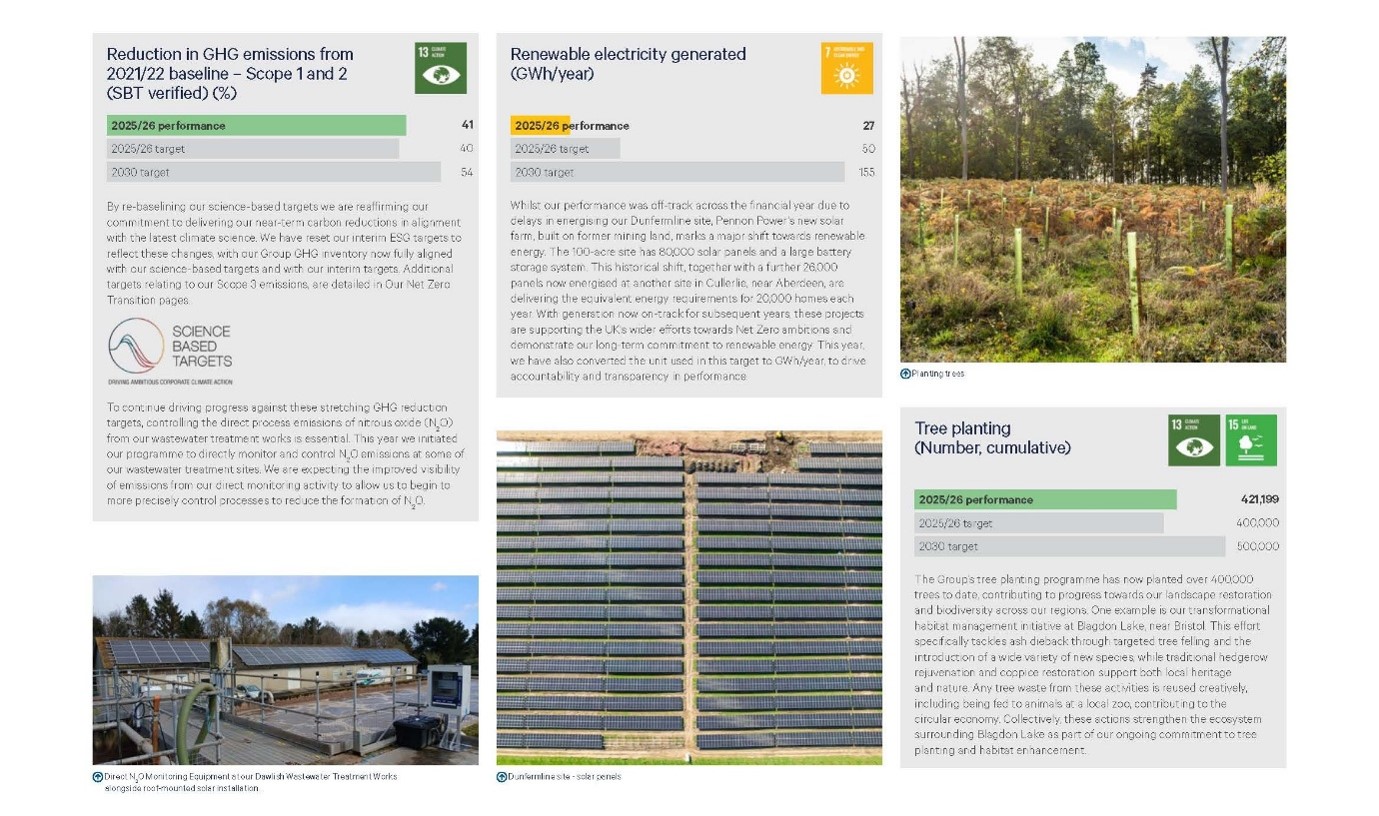
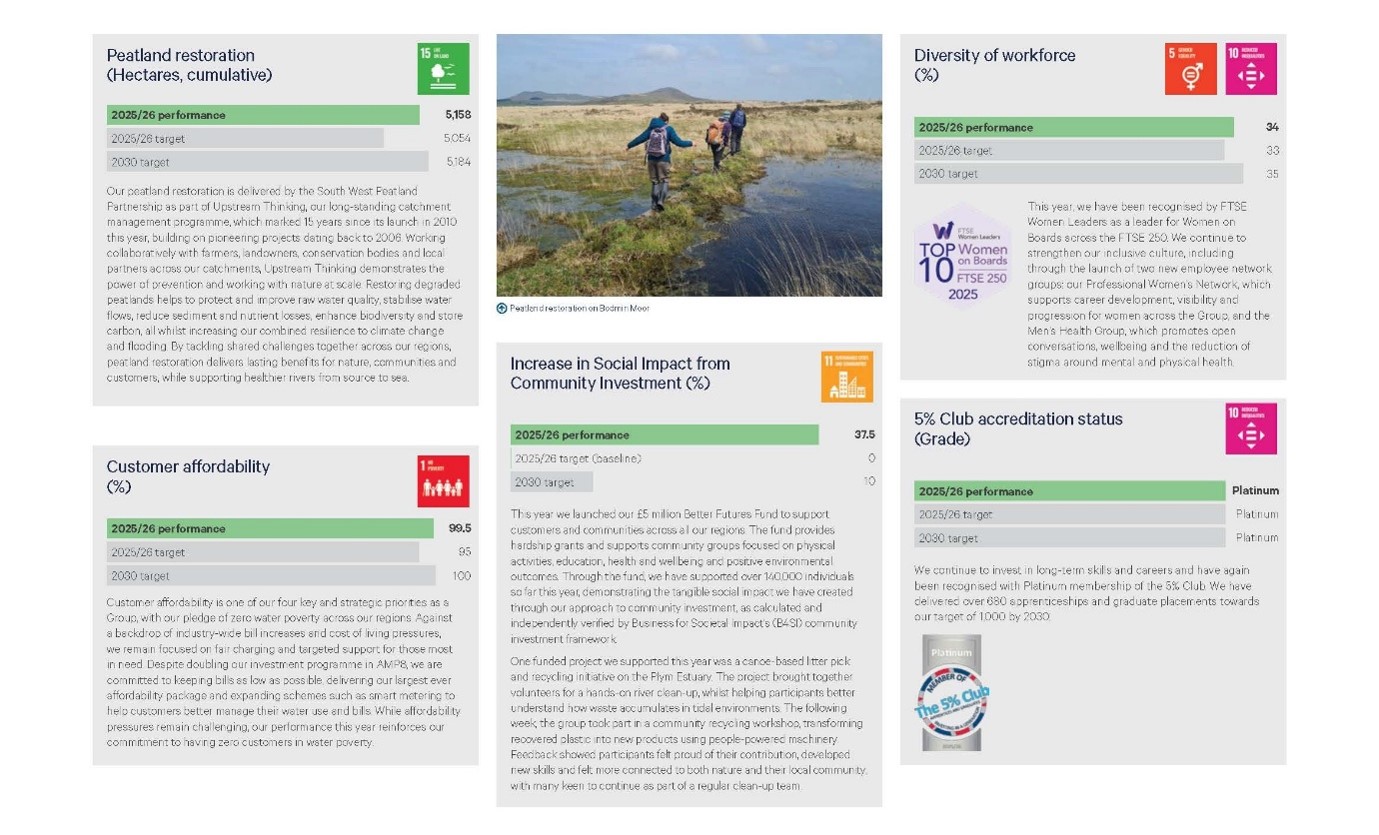
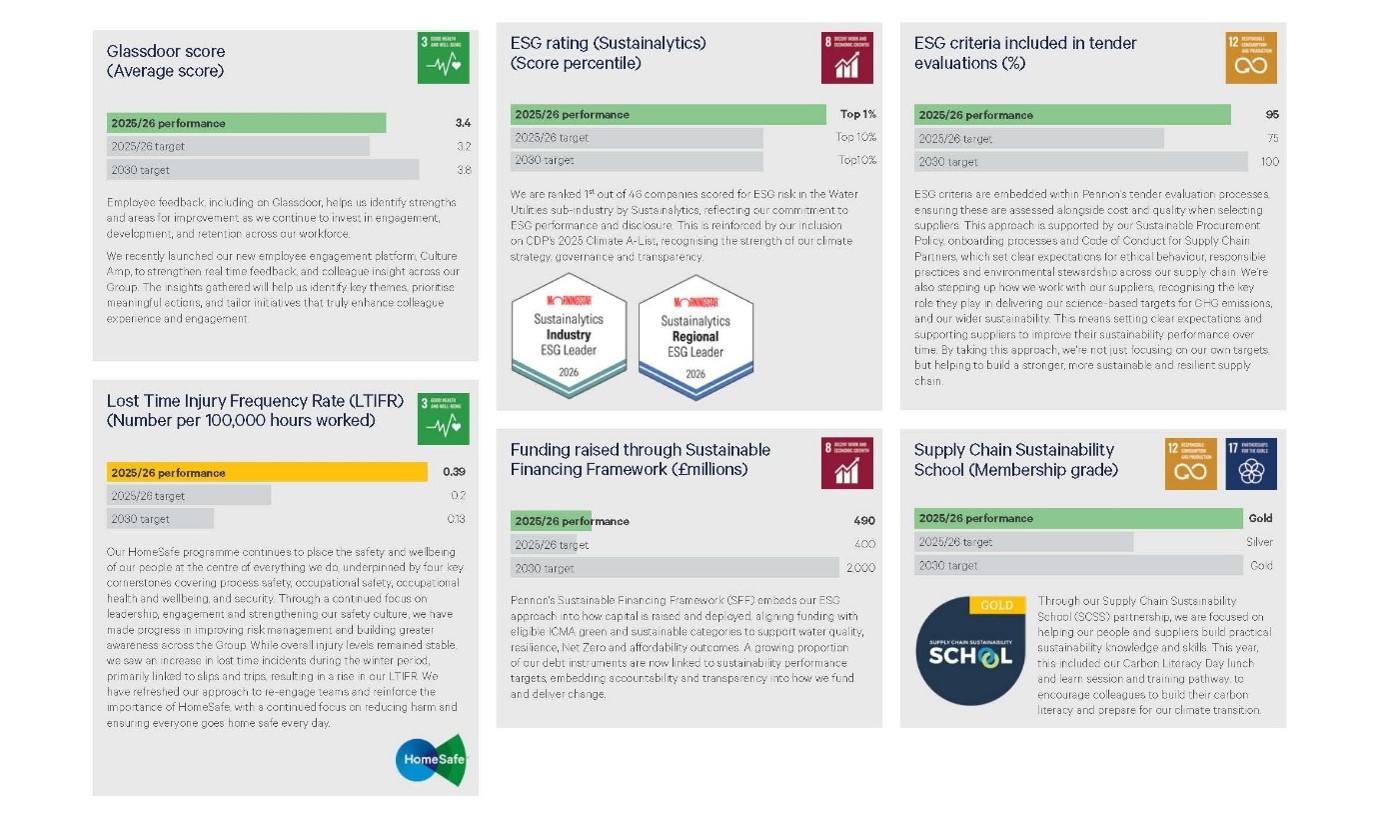
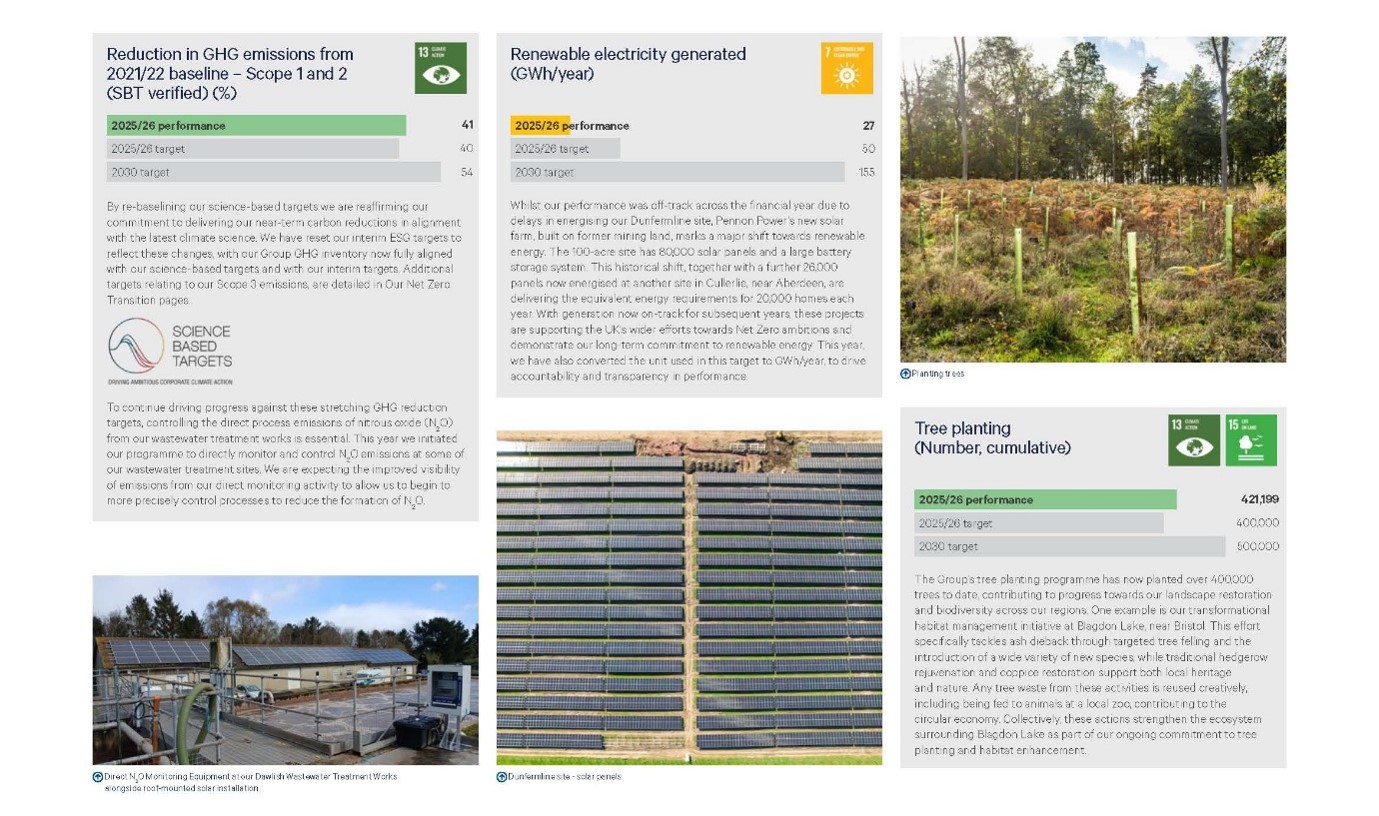
In 2025/26, we made strong progress in delivering our ESG commitments, achieving 12 out of 14 of our 2026 ESG targets, with significant progress on the remaining targets. This included advancing our Net Zero transition, achieving a 41% reduction in Scope 1 and 2 emissions from our 2021/22 baseline, expanding our catchment management approach across 95% of drinking water catchments, and surpassing 400,000 cumulative trees planted. We also strengthened environmental governance, enhanced biodiversity delivery, and expanded community and stakeholder engagement initiatives.
The 2025-2030 ESG target definitions are available here
Details on our 2030 ESG Targets are available here.
For more information on our ESG performance metrics, see the ESG Databook available here.
Further details on aspects of our ESG performance including external benchmarking and assurance can be found via the tabs below whilst further details of our ESG strategy can be found on the following pages
- Double Materiality Assessment
- 2026 ESG Target Performance and Assurance
- 2030 ESG Targets
- External Benchmarking
- UN SDGs
Last year, we undertook our first Double Materiality Assessment (DMA), marking a significant step in strengthening how we identify and prioritise ESG issues most important to our stakeholders and organisation. This assessment reaffirmed the continued importance of our core priorities, including water quality, climate resilience, freshwater stewardship and transparency, and provided a strong foundation for our strategy and targets to 2030 and beyond. This assessment was reviewed during the year and remains current. Full details of the methodology and results of our DMA are set out in the Annual Report and Accounts 2025.
During the year, we have continued to embed the outcomes of the DMA across our decision-making, risk management and disclosures, ensuring our approach reflects stakeholder expectations and evolving regulatory requirements. This supports delivery of our strategic priorities, including driving environmental gains and progressing towards Net Zero.
The following Materiality Matrix presents the quantitative results of our double materiality assessment (DMA), highlighting the ESG topics that stakeholders consider most material. The matrix visualises each topic based on two dimensions: impact materiality (Y-axis), reflecting the significance of Pennon Group’s impact on people and the environment, and financial materiality (X-axis), indicating the potential influence of each topic on our business operations and financial performance. Topics are colour-coded and listed below by Environmental, Social, and Governance (E, S, G) themes to provide a clear and structured view of our priority areas.
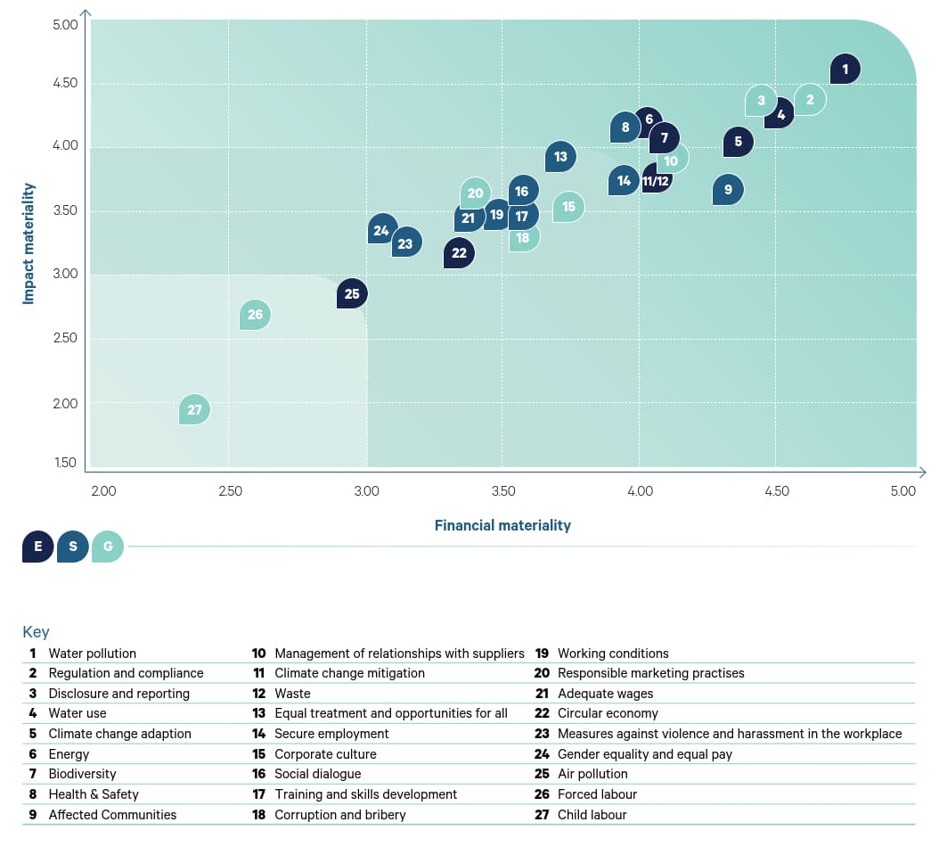
The results of our Double Materiality Assessment continue to highlight priority topics centred on water quality, climate resilience, biodiversity and regulatory compliance, reflecting the key risks and responsibilities inherent to our sector.
These insights remain integral to how we operate and directly inform delivery of the strategic priorities set out in our 2025–2030 Business Plan, including our focus on driving environmental gains, strengthening resilience and improving outcomes for customers and communities.
During 2025/26, the assessment has continued to support decision making, investment prioritisation and performance monitoring across the Group, ensuring that our ESG approach remains aligned to the areas of greatest impact to both our business and the wider environment.
This ongoing integration provides a clear and robust basis for prioritisation, governance and continuous improvement across our operations.
Our ESG targets, set for the 2025–2030 period following the completion of our Double Materiality Assessment, reflect the priority issues identified by our stakeholders that sit beyond existing regulatory commitments. These targets focus on areas of greatest impact, ensuring our ESG approach addresses the issues most relevant to both our business and the wider environment.
In 2025/26, we made strong progress in delivering against these refreshed targets, with 12 out of 14 targets on track, and further improvements expected as delivery accelerates across AMP8. This performance reflects continued progress in embedding ESG considerations across our strategy, operations and decision-making processes.
Progress during the year has been driven by advancements across key areas. We have maintained strong performance against our net zero ambitions, supported by a 41% reduction in Scope 1 and 2 emissions from our 2021/22 baseline. We have also continued to deliver our nature-based programmes, exceeding 400,000 cumulative trees planted to date, alongside strengthening our impact across communities and catchments through targeted investment and partnership programmes.
These outcomes demonstrate continued momentum in embedding ESG across the Group, while recognising that further progress is required in specific areas, including renewable electricity generation, to support delivery of our longer-term targets.
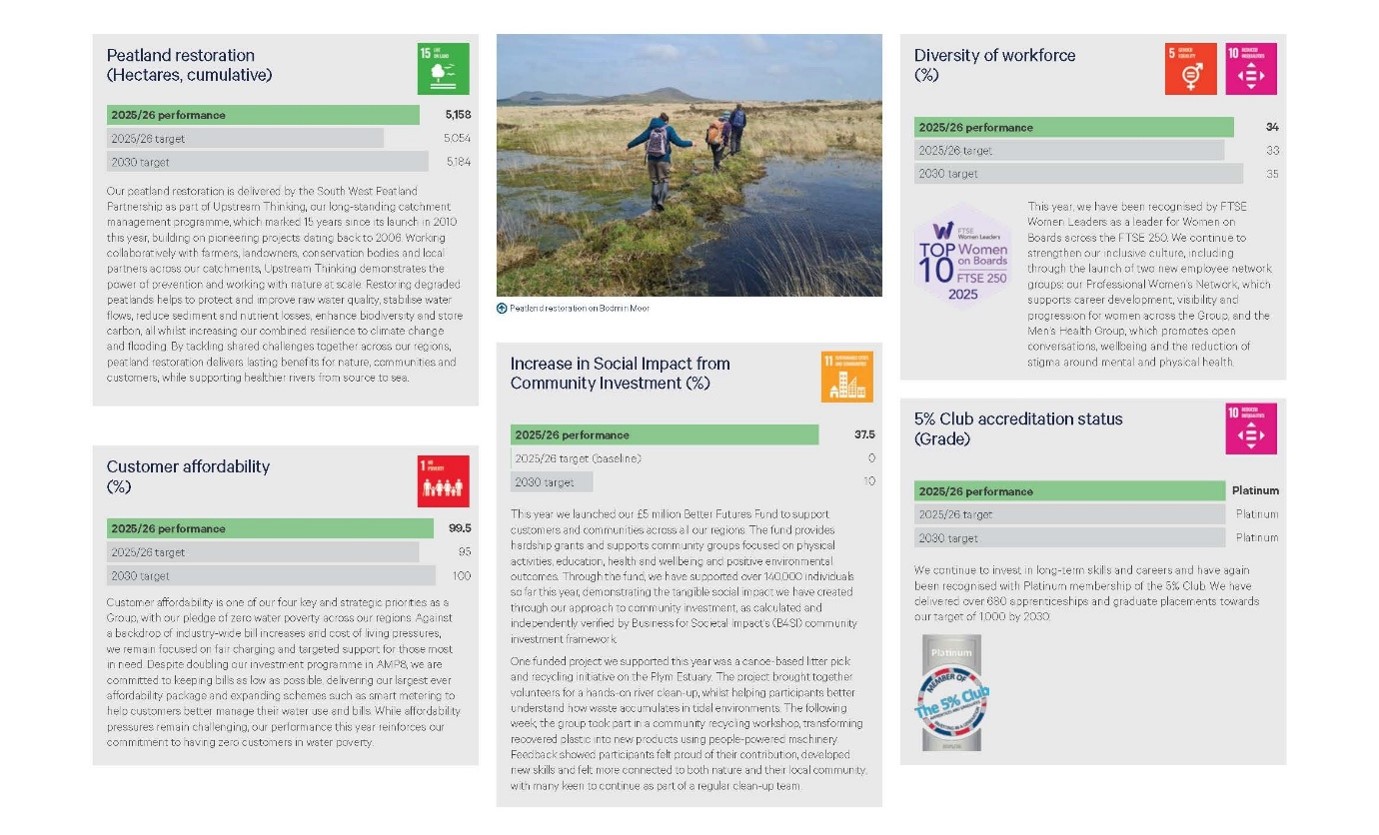
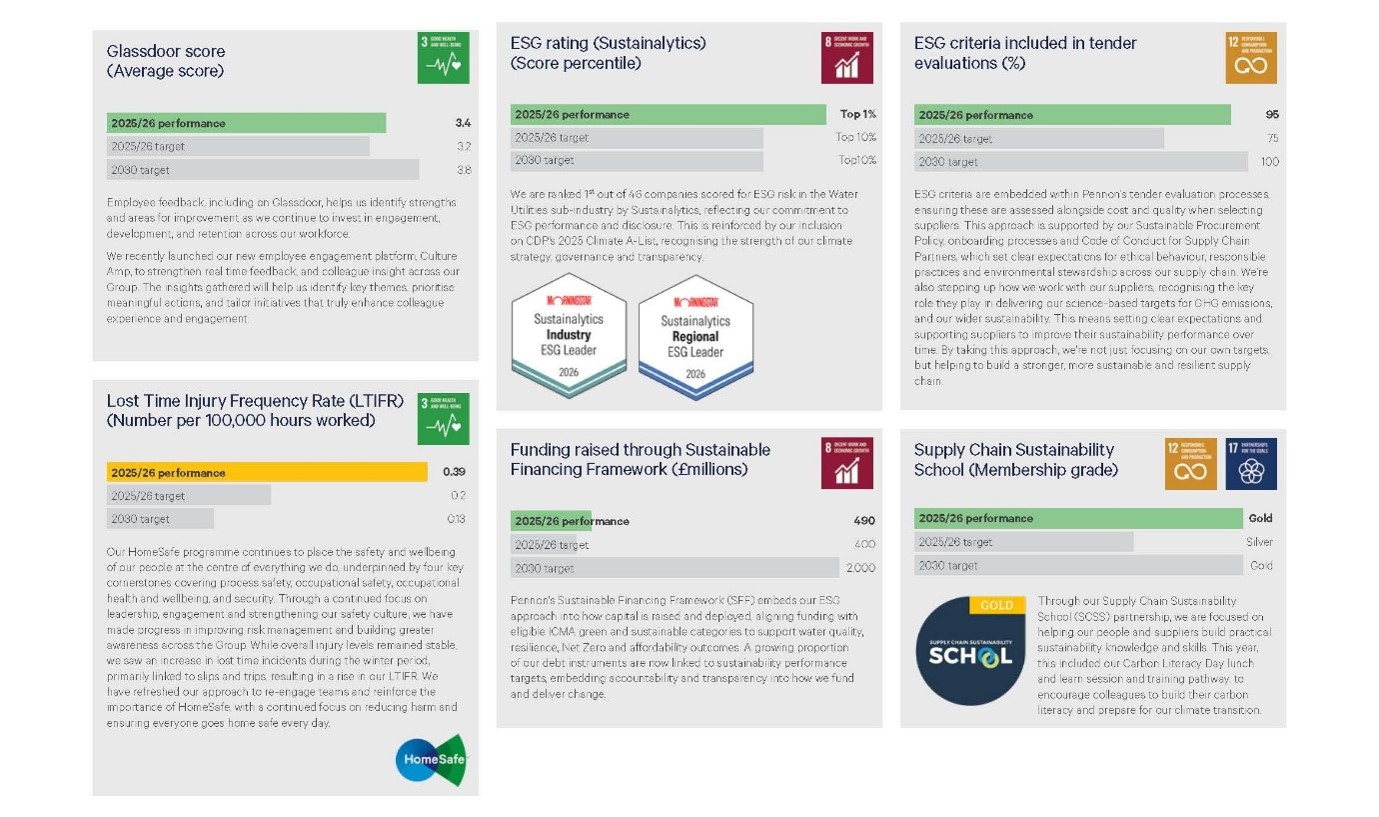
For more information on futher ESG performance metrics, see the ESG Databook available here.
Pennon’s ESG performance and reporting is assured by Jacobs, an independent consultancy with expertise in technical assurance for the utility sector. This limited assurance process is completed in accordance with the International Auditing and Assurance Standards Board’s (IAASB) International Standard on Assurance Engagements 3000 (ISAE 3000 (Revised) using a controls-based approach, assessing the processes, systems, and governance frameworks that underpin ESG data to ensure accuracy, consistency, and reliability.
Jacobs ESG Assurance Statement
Certain other disclosures within the Annual Report and ESG Databook that relate to the sustainability performance of South West Water and Bristol Water have also been subject to an independent audit of regulatory data conducted by Jacobs, who are engaged to independently audit technical (non-financial) data relating to our Outcome Delivery Incentives published in their Annual Performance Reports (APRs). This includes all regulatory targets, including a suite of environmental performance indicators.
This year, Jacobs are also conducting an independent audit of other non-financial data, also included in the APR.
Each of these assurance reports can be found in the relevant APR documents below:
www.southwestwater.co.uk/about-us/documents/Annual-reports/
www.bristolwater.co.uk/about-us/our-performance
www.seswater.co.uk/about-us/publications/our-annual-performance-report
Our Community Investment data has been assured by Business for Community Impact (B4SI).
Our ESG targets for the 2025–2030 period have been developed following the findings of our Double Materiality Assessment (DMA) and focus on the environmental, social and governance issues most material to Pennon and our stakeholders, beyond existing regulatory commitments.
2025/26 represents the first year of delivery against this refreshed set of targets. Overall performance has been positive, with 12 of our 14 targets on track, demonstrating strong early progress in embedding our priorities across the Group.
Where performance is off track, remediation plans are in place. This includes renewable electricity generation, which was impacted by delays in energising our large-scale Solar PV site at Dunfermline. The site is now operational, and performance is expected to return to target from next year. Health and Safety remain a key focus area, with continued emphasis on improving our Lost Time Injury Frequency Rate (LTIFR) through our Home Safe programme and strengthened operational controls.
During the year, we also revalidated our science-based targets (SBTs) through the Science Based Targets initiative, updating our greenhouse gas baseline to include SES Water and reflect the latest climate science. As part of this, we have reset our interim emissions reduction targets and refined our renewable electricity target to a GWh per year metric, strengthening transparency and performance tracking.
Our ESG targets provide a clear and measurable framework for action, supported by robust governance and regular oversight by the ESG Committee. Progress against each target will continue to inform decision-making as we work towards our 2030 ambitions and beyond.
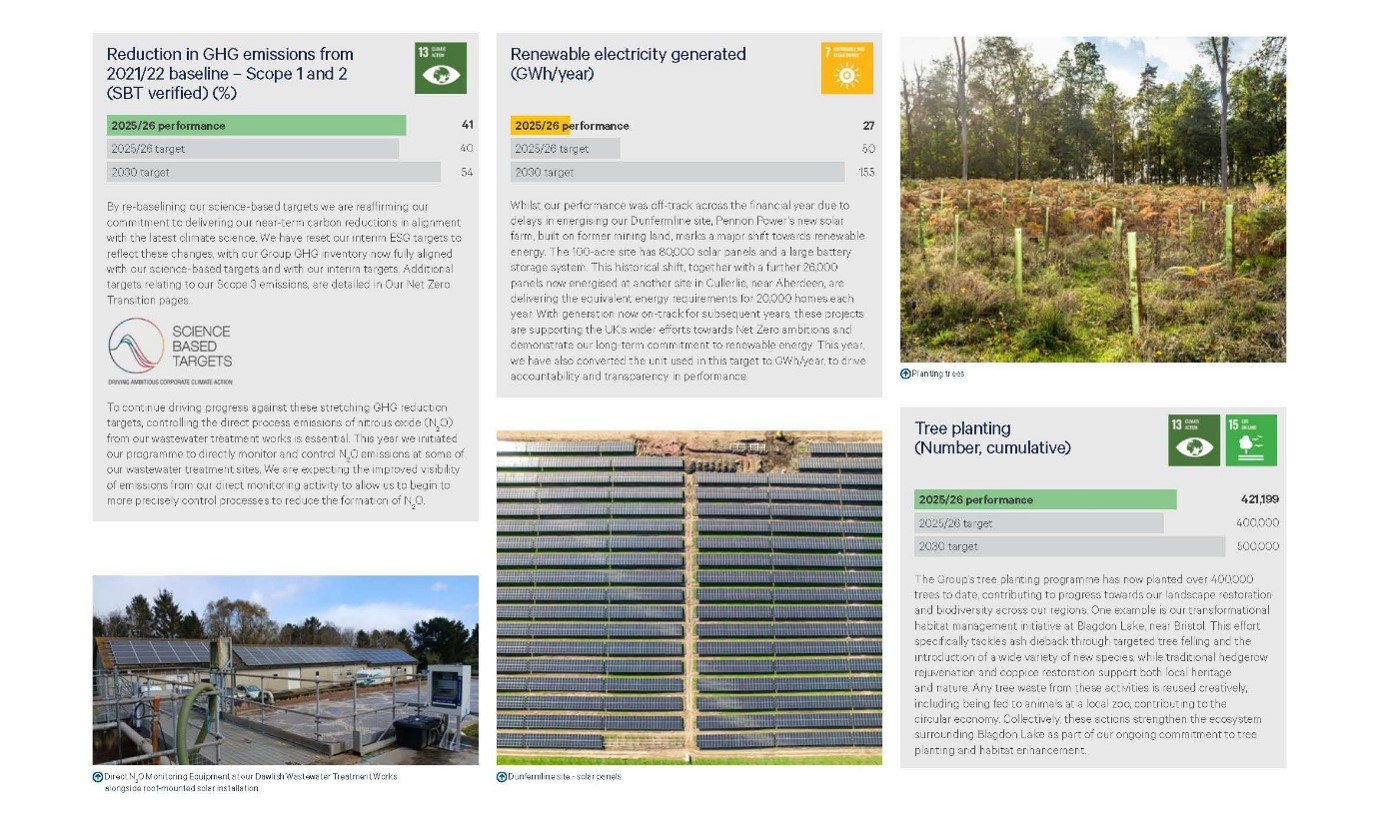
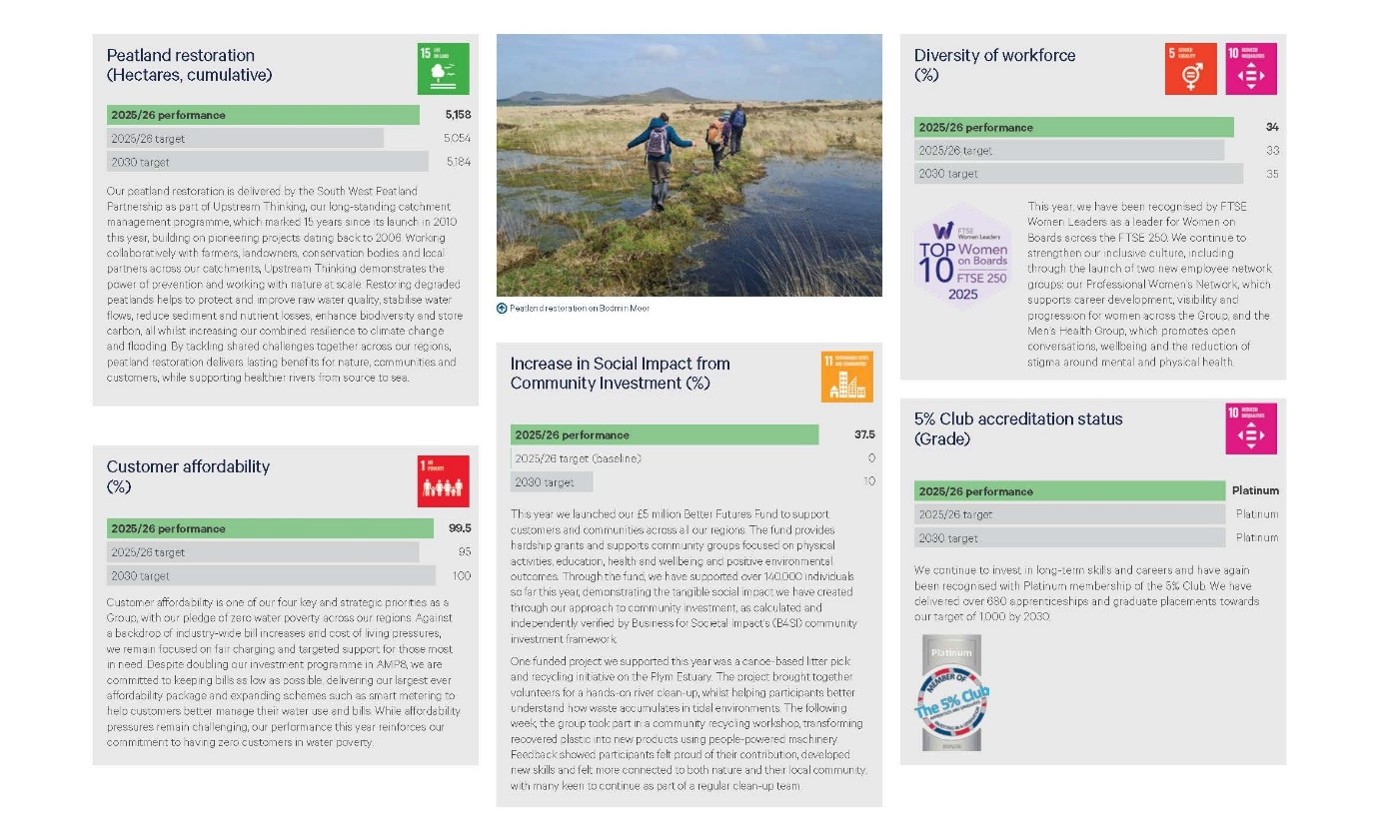
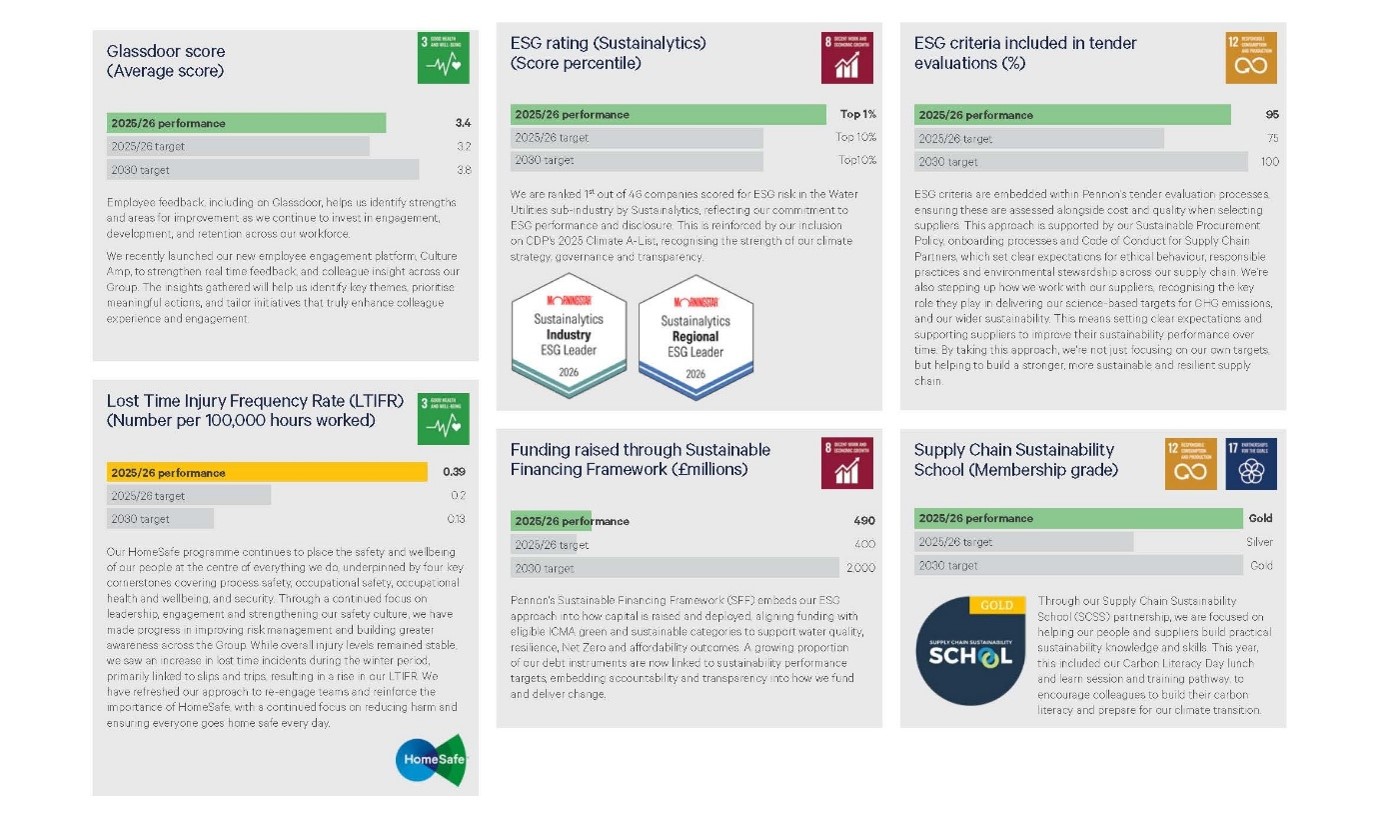
Our current ESG target definitions are available here.
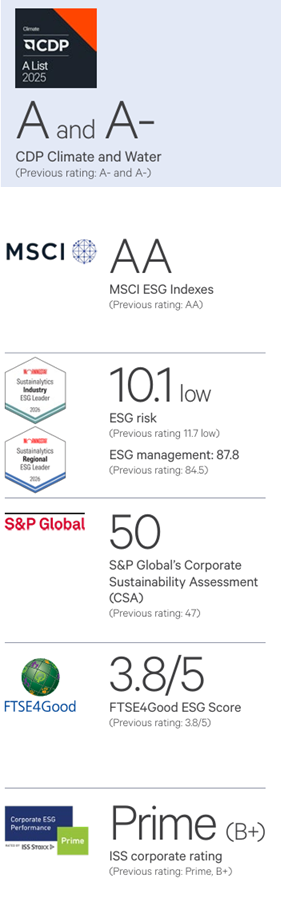
Our ESG approach continues to drive positive change, embedding sustainability at the core of our business. This commitment is reflected in our leading performance across key ESG assessments, improving our scores across these key assessments as an industry leader for ESG.
This year, we achieved inclusion in CDP’s Climate A List for the first time, recognising our leadership in climate action, disclosure and transparency and placing us amongst the top-performing organisations globally. We also maintained our strong performance in CDP Water and achieved a Supplier Engagement leadership rating, reflecting our continued progress in managing sustainability across our value chain.
Our Sustainalytics assessment ranked Pennon Group 1st out of 46 Water Utilities globally, achieving ‘ESG Top Rated’ industry and regional badges for 2026, reflecting strong governance, risk management and ESG performance.
These results reflect our unwavering commitment to sustainability, strong governance, and proactive risk management—demonstrating our leadership in ESG performance across the industry.
UN Sustainable Development Goals (SDGs)
We align our ESG approach with the UN Sustainable Development Goals (SDGs) to support global sustainability outcomes and inform our strategic priorities. As we progress against our 2025–2030 ESG targets, each target has been mapped to the SDGs it most directly supports, ensuring continued alignment with international frameworks.
Our most significant contribution continues to be to SDG 6: Clean Water and Sanitation, which reflects our core purpose as a water and wastewater services provider. This commitment is further reinforced through our Double Materiality Assessment, which ensures our targets focus on the ESG topics most material to both our stakeholders and our business.

UN Global Compact
In support of the SDGs, we remain a signatory to the UN Global Compact, the world’s largest corporate sustainability initiative.
We continue to embed the principles of the Compact across our business. Through this report, we outline how we apply and uphold the Ten Principles across human rights, labour, environment and anti-corruption.
As part of this commitment, we report annually in our Annual Report and Accounts on our progress, strengthening transparency, accountability and responsible business practices across our operations and supply chain, and reinforcing our ambition to lead with integrity and build trust with our stakeholders.